
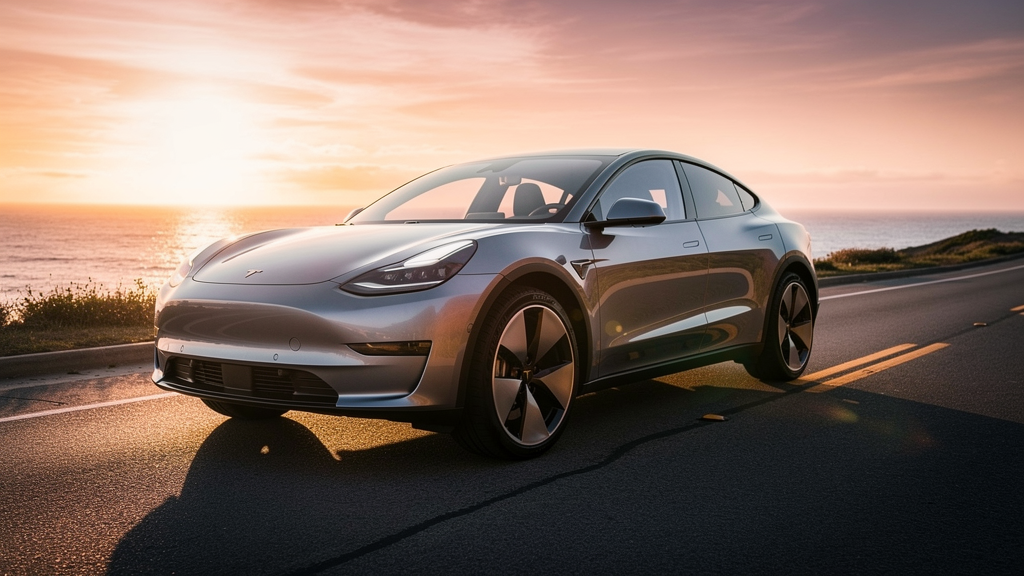
Mazda has spent the last two years talking about hybrids and rotary range-extenders while rivals went all-in on batteries. That changed with the CX-6e, a mid-size electric SUV that just went on sale in the UK and Australia as the brand’s first vehicle built from the ground up as an EV, rather than converted from a combustion platform. It arrives into one of the most contested corners of the car market, sitting alongside the Tesla Model Y, the Zeekr 7X and a swelling field of Chinese-built electric crossovers, and the early reviews trickling in from both markets give a clearer picture of where it actually lands than the launch press release did.
A new platform, not just a new badge
The CX-6e is the SUV half of a two-model push, sharing its underpinnings with its sedan sibling, the Mazda 6e. Both are built on a platform developed with Changan, Mazda’s long-time joint-venture partner in China, and the CX-6e’s bones are closely related to the Changan-owned Deepal S07. That’s not a knock on the car — plenty of credible EVs now come out of shared-platform deals — but it does mean the CX-6e’s underlying engineering is less “Hiroshima” and more “Chongqing,” which is worth knowing if brand provenance matters to you as much as the spec sheet.
What Mazda has clearly tried to retain is the design and tuning layer on top. Reviewers in Australia singled out the CX-6e’s styling as a genuine strength, describing it as “nicely executed design, inside and out,” and the silhouette avoids the slightly anonymous crossover look that affects several of its Chinese-platform rivals.
Pricing and specs: what you actually get
Every CX-6e sold so far uses the same core powertrain: a single rear-mounted electric motor producing around 258 hp (190 kW) and 290 Nm of torque, paired with a 78 kWh lithium-iron-phosphate (LFP) battery. Mazda quotes a WLTP range of up to 300 miles, or 484 km on the slightly different Australian test cycle — figures that are broadly in line with the Tesla Model Y Long Range rather than a clear step ahead of it.
Charging is one area where the numbers are genuinely competitive: Mazda claims a 10-80% DC fast-charge time of 24 minutes at up to 200 kW, with 11 kW as the onboard AC ceiling. Pricing varies by market, as it always does with LFP-battery EVs built around a global platform:
- UK: Takumi from £42,990, Takumi Plus from £45,350
- Australia: GT from AU$53,990, Azami from AU$56,990
- Boot space: 468 litres behind the rear seats, 1,434 litres with them folded
- Warranty: five years/unlimited km on the vehicle, eight years/160,000 km on the battery
That warranty is worth flagging on its own. Five years and unlimited kilometres on the vehicle is a step behind what some rivals now offer, and at least one Australian reviewer called it “a little underwhelming” for a car built to compete with newer entrants that often lean on longer cover to offset being a less established name. The eight-year battery warranty is more in line with the rest of the segment.
Interior and technology
Inside, Mazda has gone all-in on screen real estate, fitting a 26.45-inch display across both trims, alongside a head-up display, wireless Apple CarPlay and Android Auto, a 21-speaker stereo, and heated and ventilated front seats as standard. Rear-seat space has been called out repeatedly as a highlight — “backseat space for days,” as one Australian review put it — which tracks with the CX-6e being built specifically as an EV rather than having to work around a combustion car’s transmission tunnel and fuel tank packaging.
Not every tech decision has landed well. The digital wing mirrors fitted to the higher Azami/Takumi Plus trims — camera feeds displayed on small interior screens instead of glass mirrors — have drawn consistent criticism, with reviewers preferring the simpler, cheaper trim specifically to avoid them. It’s a reminder that “more screens” doesn’t automatically mean “better experience,” and it’s worth testing that system yourself before assuming you’ll adapt to it.
Early verdicts: what reviewers are actually saying
Full long-term road tests are still thin on the ground this soon after launch, but the first drive impressions out of Australia and the UK are consistent on a few points: the design and interior space are genuine strengths, the tech list is generous on paper, and the driving experience is merely competent rather than exciting. One Australian outlet flagged unspecified “flaws in the drive experience” without detailing them further, which is the kind of vague caveat worth taking seriously rather than dismissing — it suggests a car that’s fine on a test loop but hasn’t yet convinced anyone it’s genuinely good to drive, as opposed to just acceptable.
That lines up with how Mazda has historically positioned itself: cars that are pleasant and well-resolved rather than outright thrilling. The CX-6e looks like it’s continuing that tradition in electric form, rather than using the clean-sheet platform to chase a sportier character the way some rivals have.
How it stacks up against the competition
The headline comparison every outlet has reached for is the Tesla Model Y, and on paper the CX-6e holds its own on range and undercuts it modestly on starting price in most markets, while offering a more conventional, button-and-dial interior for buyers who find Tesla’s screen-only approach a step too far. The Zeekr 7X is the closer mechanical cousin, given the shared Chinese manufacturing base and LFP battery chemistry, and buyers cross-shopping the CX-6e should put that car on the list too rather than assuming a Mazda badge buys meaningfully different hardware.
It’s a useful reminder of how fast the EV flagship and mid-size segments are both moving right now. We saw a similar story play out at the performance end of the market when we compared the Porsche Taycan Turbo GT against the Tesla Model S Plaid: spec-sheet numbers are converging across brands, and the real differentiators are increasingly software, interior feel and charging infrastructure rather than raw range or power. Mazda’s broader shift toward electrification mirrors what’s happening even in enthusiast categories we’ve covered, like the shrinking but increasingly electrified hot hatch class of 2026. If your interest runs more toward combustion performance while that transition plays out, our breakdown of the BMW M3 against Audi’s hybrid RS5 Avant covers the other end of that spectrum.
Should you wait or buy in?
The CX-6e is a credible first attempt at a dedicated Mazda EV, with real strengths in interior space, screen tech and charging speed, and a starting price that’s competitive rather than inflated for a new nameplate. It’s not, on the evidence so far, a car that reinvents what a mid-size electric SUV should feel like to drive, and the vague-but-repeated criticism of “the drive experience” is worth confirming for yourself on a test drive before signing anything. If you’re set on the cheaper trim, the GT/Takumi avoids the digital mirrors that have bothered reviewers and saves you several thousand over the flagship for a car that’s otherwise mechanically identical.
For buyers who already like Mazda’s design language and want an EV that doesn’t feel like a tablet on wheels, the CX-6e is worth a serious look. For buyers chasing the single best range, charging network or outright driving experience in this price bracket, it’s competitive rather than class-leading — and in a segment adding new, broadly similar options every few months, that gap could close or widen quickly as full road tests land.