
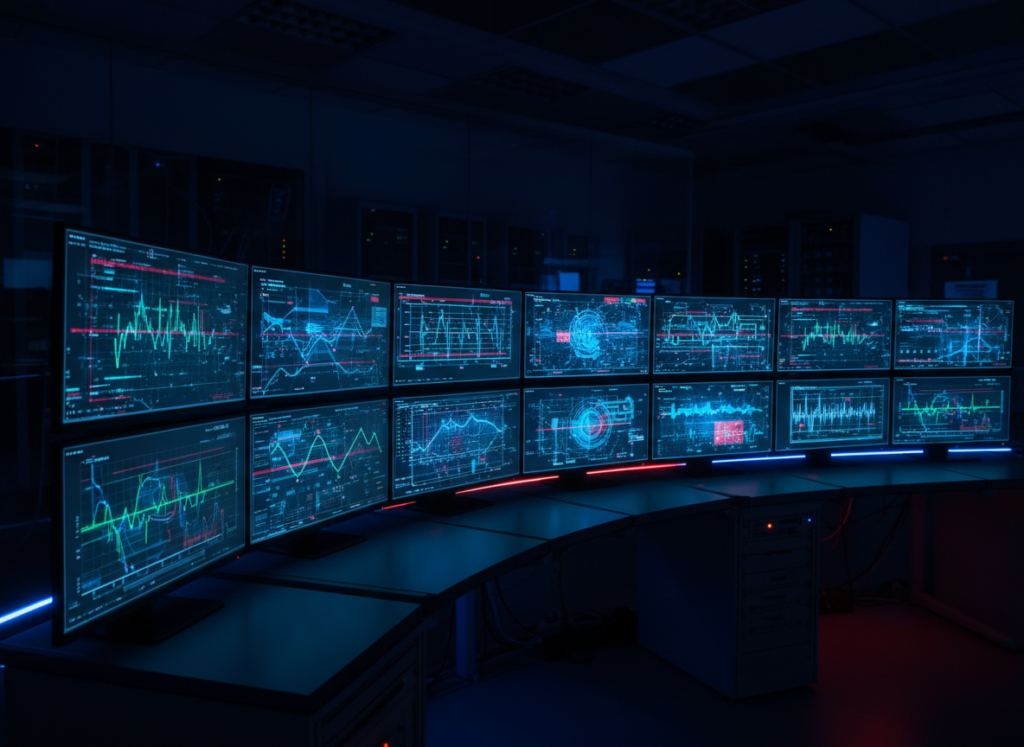
In modern Formula 1, the fastest driver isn’t just supported by elite mechanics—they are backed by supercomputers and cloud infrastructure. During a single Grand Prix weekend, a single car generates gigabytes of real-time telemetry data across thousands of channels. For the tech-savvy US audience, understanding F1 telemetry offers a fascinating look into how big data, machine learning, and edge computing directly dictate track performance and race outcomes.
The Anatomy of an F1 Sensor Network
An F1 car is essentially an ultra-fast Internet of Things (IoT) device. Every chassis is equipped with over 300 sophisticated sensors monitoring everything from brake temperatures and tire pressure to engine combustion efficiency and aerodynamic pressure differentials.
These sensors feed data into an onboard Electronic Control Unit (ECU). The telemetry pipeline operates on two distinct channels: burst data (transmitted wirelessly when the car passes the pit wall) and real-time continuous data. High-frequency wireless telemetry allows remote engineering teams to monitor vehicle health continuously while the car navigates the track at over 200 miles per hour. This advanced system ensures no critical performance metric is ever lost during a race. By instantly processing these metrics, technicians can proactively identify potential mechanical anomalies before they escalate into catastrophic engine failures, effectively saving massive seasonal repair budgets globally.
Real-Time Cloud Processing and Remote Pit Walls
Processing millions of data points every second requires a sophisticated cloud computing architecture. Modern teams partner with major technology providers to stream live telemetry directly from the track garage to factory headquarters in Europe within milliseconds.
These remote operations centers (often referred to as “mission control”) house teams of data scientists and simulation engineers. Using high-speed satellite links, they ingest the live feed to run predictive models simultaneously. While the trackside engineers focus on immediate operational tasks, factory analysts evaluate long-term strategy options, analyzing macro-environmental variables and mechanical degradation trends in real-time.
Predictive Analytics and Machine Learning in Race Strategy
The true power of F1 telemetry lies in predictive analytics. Historical telemetry logs are combined with live weather forecasts and track evolution metrics to feed machine learning algorithms.
These predictive models constantly run Monte Carlo simulations—calculating thousands of possible race scenarios every minute. When a unexpected disruption occurs, such as a Safety Car deployment, these algorithms immediately calculate the probability of success for pitting versus staying out. Applying predictive data modeling to refine your overarching F1 race strategy allows team principals to make multi-million dollar decisions with absolute mathematical confidence.
Cybersecurity and Data Integrity in Motorsport
Because telemetry contains a team’s most valuable intellectual property, cybersecurity is a paramount concern in modern racing operations.
Live telemetry streams are protected by enterprise-grade encryption protocols to prevent industrial espionage and signal interception by rival constructors. A breach in data integrity could reveal proprietary engine maps, aerodynamic efficiency curves, or tire thermal windows. Consequently, teams invest heavily in secure cloud infrastructure, zero-trust network architectures, and encrypted telemetry pipelines to safeguard their technological advantages throughout the championship season.
The Future of Big Data in Global Motorsports
As artificial intelligence and neural networks continue to evolve, the integration of big data in racing will only deepen. Future telemetry architectures will likely incorporate advanced predictive maintenance algorithms capable of forecasting mechanical failures before physical sensors detect a vibration.
For motorsport enthusiasts and technology professionals alike, Formula 1 serves as the ultimate high-speed testing ground for enterprise computing technology. You can explore how official technological partnerships function directly on the AWS Formula 1 Portal. The innovations developed to process high-velocity telemetry data at 200 mph regularly flow downstream, transforming commercial automotive design, fleet management software, and global logistics systems.