
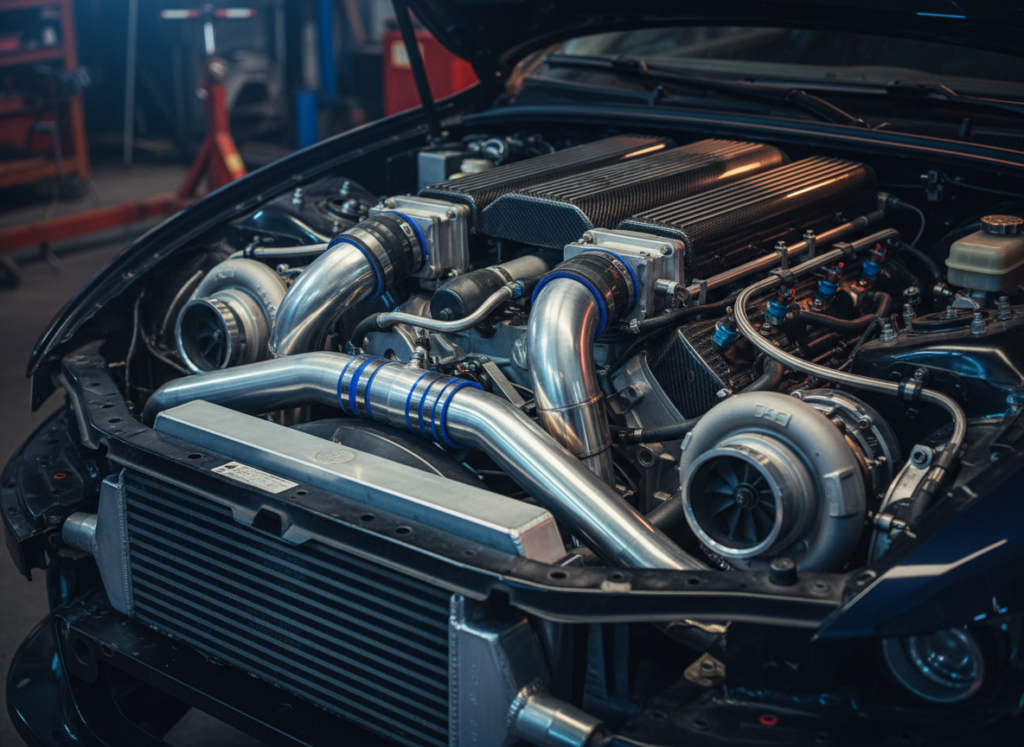
The global automotive aftermarket is a multi-billion dollar industry driven by enthusiasts looking to extract maximum performance from their daily drivers. If you want to understand the absolute peak of modern automotive upgrades, looking into F1 technology car modifications is the best starting point. While standard car reviews focus on factory specifications, the true potential of a vehicle is often unlocked in the garage. From sophisticated software calibrations to advanced composite materials, the same fundamental physics and engineering principles utilized in Formula 1 are continuously trickling down to the street car tuning scene.
ECU Remapping: The Software Behind the Speed
In modern automotive engineering, mechanical components are entirely governed by digital brains. Just as Formula 1 teams rely on highly complex Electronic Control Units (ECUs) to manage ignition timing, fuel injection, and hybrid energy deployment, modern street cars utilize similar central processing units.
One of the most popular and cost-effective car modifications is ECU remapping or tuning. By accessing the vehicle’s onboard computer, performance tuners can alter the factory software parameters. This digital modification effectively removes artificial limiters placed by manufacturers for emissions or broad reliability targets. Enthusiasts can optimize air-to-fuel ratios and increase turbocharger boost pressure, resulting in significant horsepower gains without changing a single physical engine component. This software-driven approach to performance directly mirrors how F1 trackside engineers continuously adjust engine mapping software via telemetry to adapt to different track conditions.
Aerodynamic Upgrades and CFD Optimization
When street car owners look to improve high-speed stability and cornering grip, they turn to aerodynamic modifications. Adding front splitters, rear diffusers, and oversized rear wings are staples of automotive customization. However, the science behind these parts originates directly from the wind tunnels of top-tier racing constructors.
In Formula 1, aerodynamics are strictly defined by computational fluid dynamics (CFD). Engineers use supercomputers to mathematically model how air flows over, under, and around the chassis to generate maximum downforce while minimizing drag. Today, premium aftermarket tuning companies utilize the exact same CFD software architecture to design their body kits. A properly engineered carbon fiber front splitter does not just enhance the visual aesthetics of a sports car; it fundamentally alters the high-pressure zones beneath the vehicle, literally pushing the tires harder into the tarmac to increase mechanical grip during high-speed maneuvers.
Advanced Materials: The Carbon Fiber Revolution
Weight reduction is a fundamental pillar of racing engineering. Sir Colin Chapman, a legendary figure in motorsport design, famously operated on the philosophy of “simplify, then add lightness.” Formula 1 revolutionized structural engineering by introducing the carbon fiber monocoque in the early 1980s, prioritizing materials that offered extreme tensile strength with minimal mass.
This material science has dramatically impacted the modern car modification market. Heavy factory components—such as steel hoods, fiberglass fenders, and cast-iron exhaust manifolds—are routinely replaced with aerospace-grade materials. Upgrading to a carbon fiber hood or installing a titanium exhaust system significantly reduces the vehicle’s overall curb weight. This reduction directly improves the power-to-weight ratio, leading to faster acceleration metrics, shorter braking distances, and enhanced suspension responsiveness on mountain roads or weekend track days.
Telemetry and Driver Analytics on Track Days
The integration of data analytics is no longer exclusive to elite racing paddocks. Historically, amateur drivers relied solely on physical sensation and mechanical intuition to gauge vehicle performance. Today, the market for F1 technology car modifications offers advanced consumer-grade telemetry systems directly inspired by motorsport data logging.
Track day enthusiasts can now install sophisticated GPS-enabled data loggers and onboard diagnostic (OBD) scanners. These devices record real-time metrics including lateral G-forces, brake pressure applications, throttle percentages, and exact lap time deltas. By exporting this data into analytical software, drivers can mathematically pinpoint where they are losing fractions of a second on a circuit, much like analyzing professional F1 telemetry data. This data-driven approach allows for precise adjustments to suspension camber, tire pressure, and driver technique.
The Economic Engine of the Aftermarket
The transition of technology from the racetrack to the driveway fuels a massive economic ecosystem. The research and development initially funded by multi-million dollar F1 budgets eventually amortizes and scales for consumer manufacturing. This economic pipeline allows smaller aftermarket engineering firms to thrive by adapting high-end racing concepts for commercial sports cars. By bridging the gap between elite motorsport engineering and consumer passion, the industry for F1 technology car modifications continues to experience exponential financial growth globally. You can see how top-tier engineering firms are applying these motorsport principles on platforms like Bosch Motorsport.